H2OPE
Intro
H2OPE is a French cleantech company behind the River Whale, a low-tech system that captures plastic in rivers before it reaches the ocean. The technology was ready, but the brand wasn't: after COVID-19, momentum had stalled and 90% of stakeholders had never heard of the company. This project rebuilt H2OPE's positioning, visual identity, and communication system to match the strength of what it had already engineered.
Deliverables:
Logo Design
Art Direction
Branding
Content
Motion Design
Brand Strategy
Year
/
2025
The Problem
H2OPE had built one of the more elegant answers to ocean plastic pollution: the River Whale, a low-tech, autonomous, energy-free system that captures plastic in rivers — upstream of where 80% of ocean pollution actually originates. The patent was filed. The technology worked. The company couldn't find its audience.Research surfaced the gap in numbers. 90% of stakeholders had never heard of H2OPE. 80% couldn't connect the brand to its own social channels. 50% didn't recognise its flagship product. After COVID-19, momentum had stalled and never recovered. The communication was emotionally flat, the visual identity fragmented, the digital presence inactive. Investors asked for impact data the brand couldn't articulate. The public encountered the technology as a complex abstraction with no obvious link to their lives.A strong product was being held back by a quiet voice. The work was to give it one.
Positioning
The first decision wasn't visual — it was narrative. H2OPE had been positioning itself within the ocean cleanup conversation, a space already saturated by larger, better-funded players. We moved the brand upstream, both literally and rhetorically: from cleaning the ocean to preventing pollution from reaching it.That shift unlocked three positioning axes that now run through every touchpoint.Simplicity as strength. The River Whale works precisely because it doesn't require power, algorithms, or constant maintenance. Rather than hiding the low-tech nature of the solution behind engineering jargon, we made it the central claim. Reliability through simplicity is rare in cleantech — it deserved to be the headline, not a footnote.Circular economy as the business model. The brand stopped describing itself as a cleanup service and started describing a closed loop: install, collect, sort, recycle, analyse. This reframing gave H2OPE a language municipalities, recyclers, and impact funds could all parse, and it made the offering legible as infrastructure rather than charity.Story over statistics — but evidence underneath. Investors need data; everyone else needs a reason to care. The communication system delivers narrative on the surface and proof points immediately beneath it, so the same materials work for a city procurement officer and a Gen Z follower without compromise.The line that anchors the whole system: Be part of our story. Be part of our future.
Visual Language
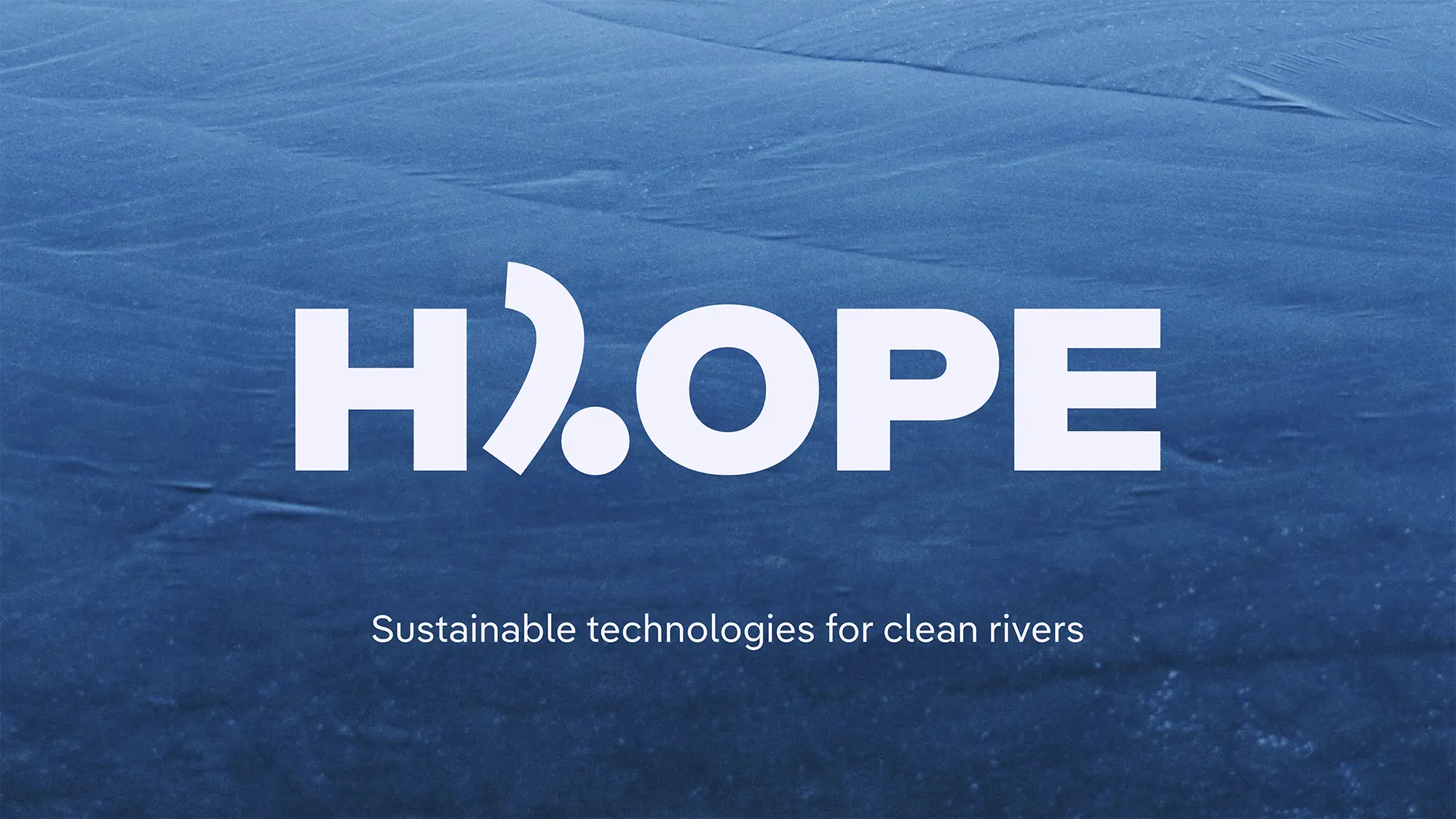
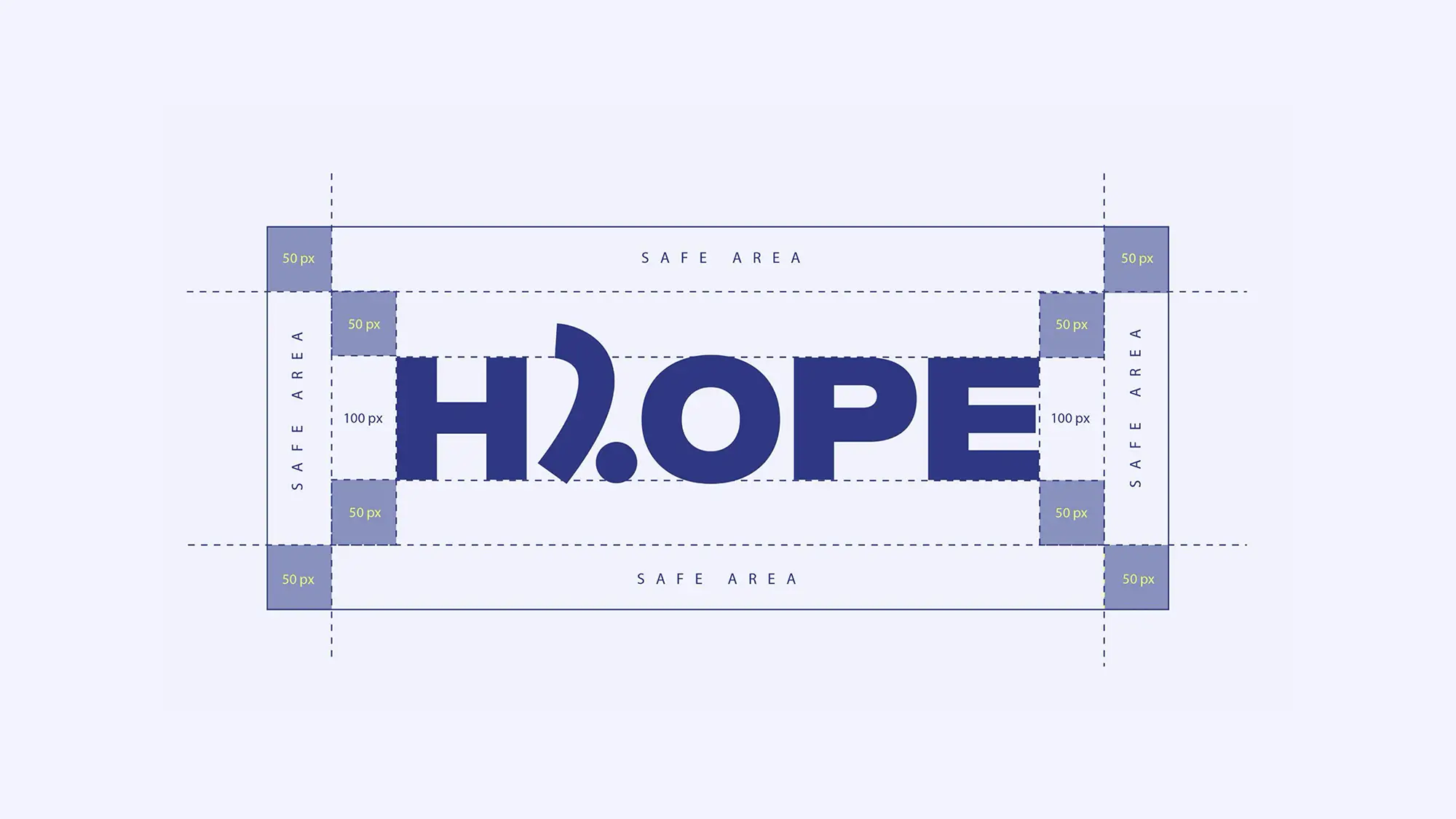
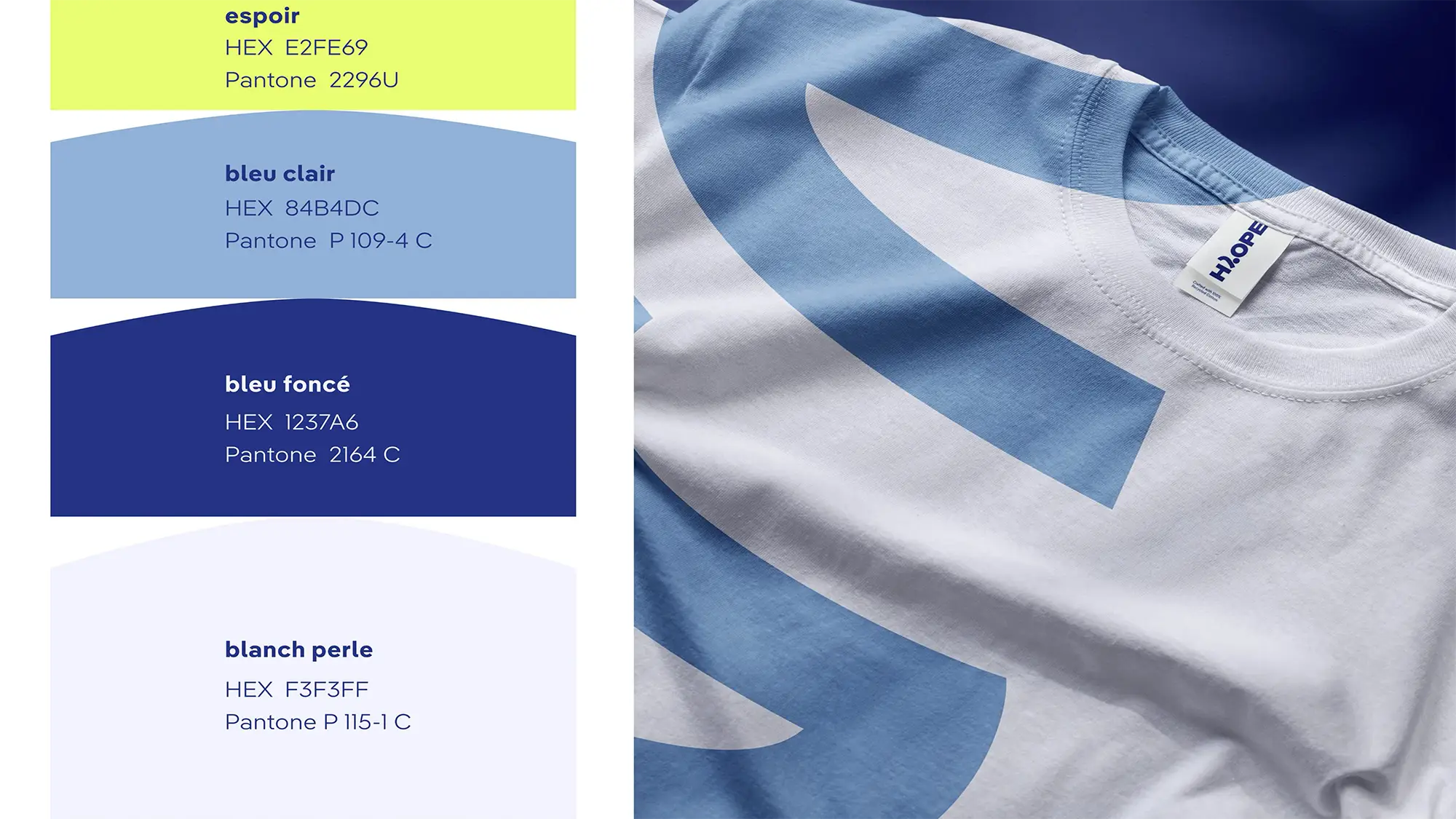
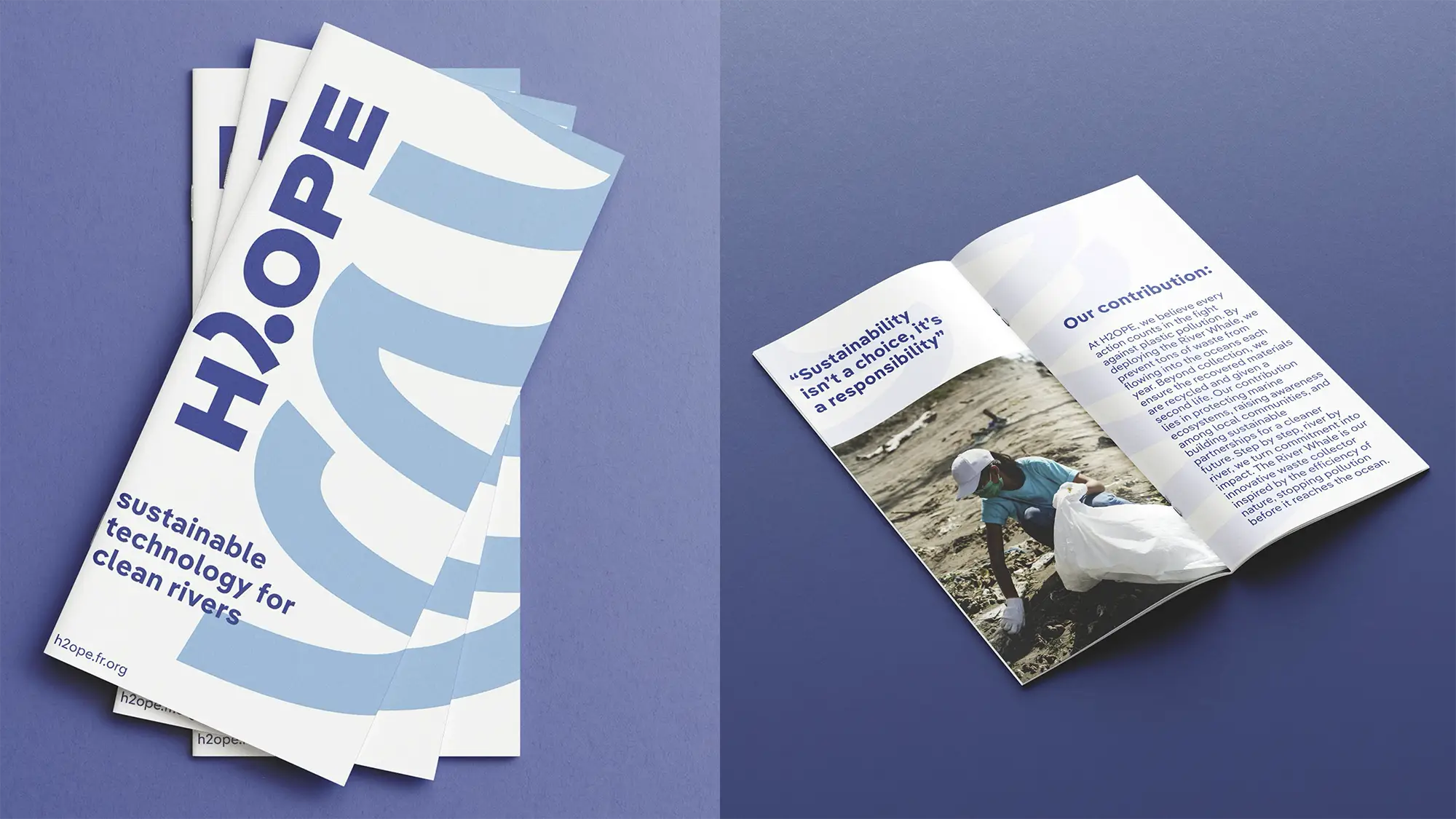
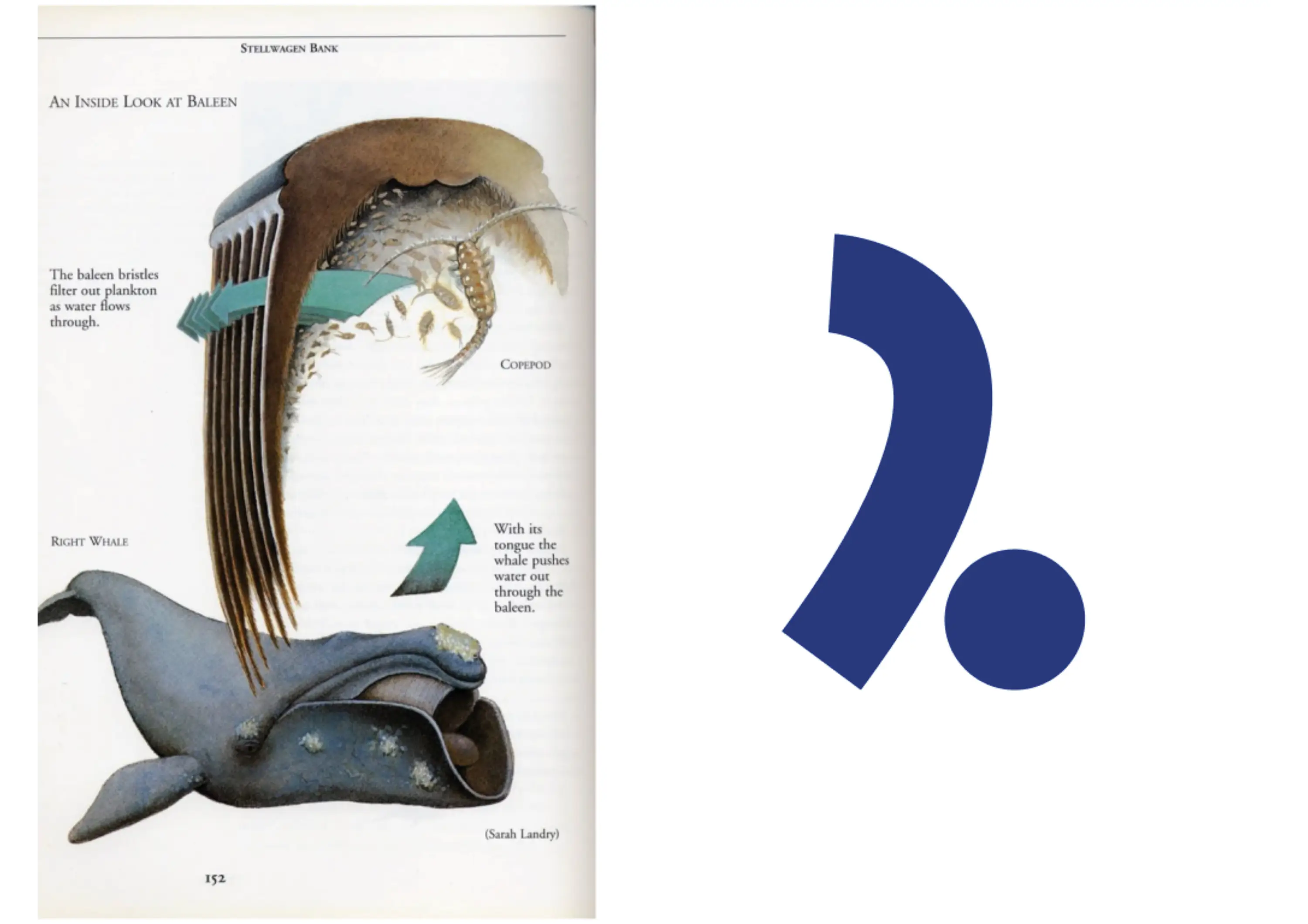
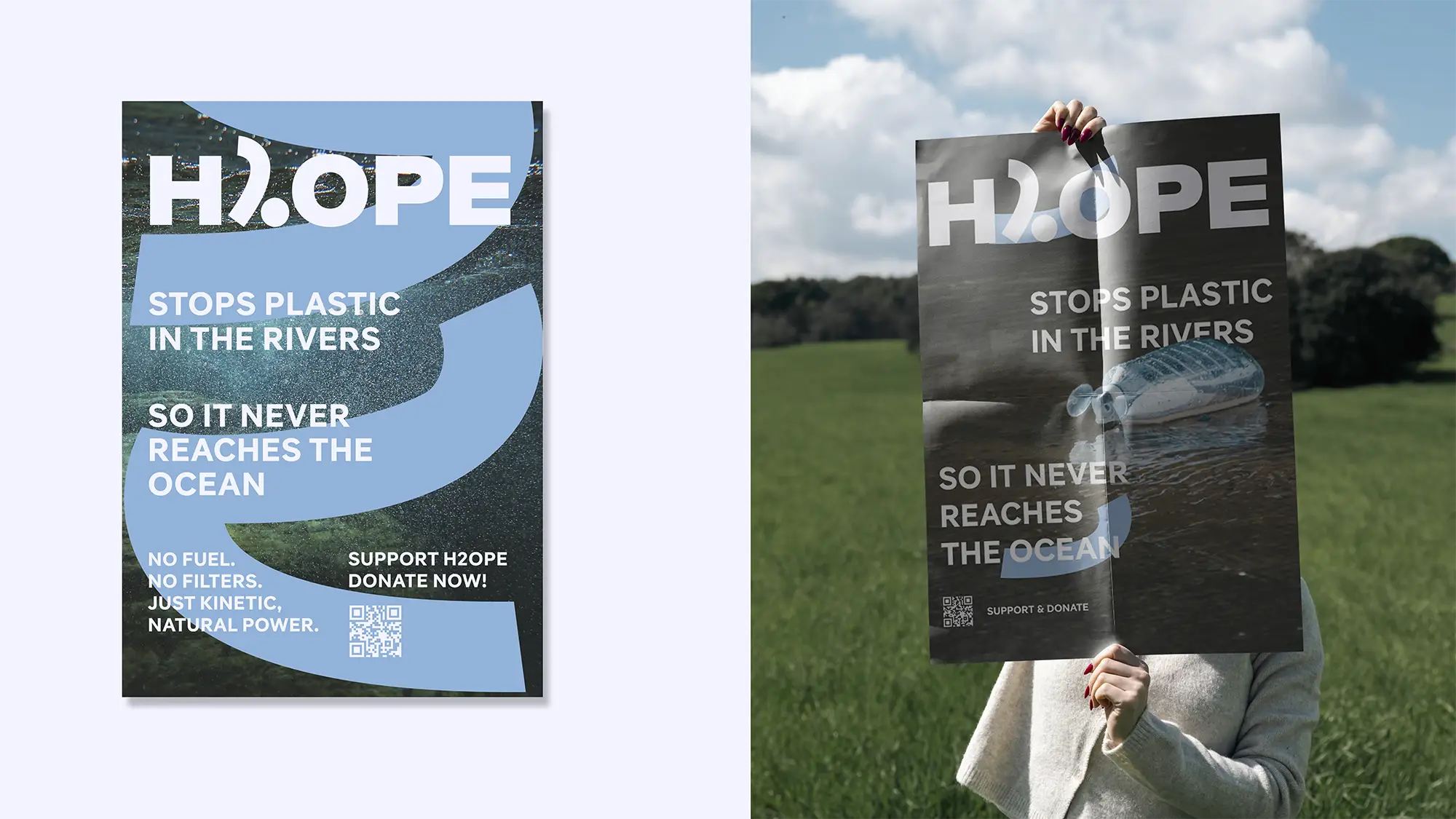
Six competitors share the H2OPE name. The visual system had to do three things simultaneously: stand apart, signal ecological credibility, and remain legible to audiences ranging from public officials to teenagers on TikTok.Logo and monogram. The mark is built from the silhouette of whale baleen — the same form that makes the technology work. The monogram reads as a wave, a drop, and a tail at once. The identity doesn't illustrate the product; it repeats its operating principle.Palette. Bleu foncé anchors the system in the trust and depth public authorities respond to. Bleu clair carries water, transparency, and accessibility. Espoir — a lime green — signals life and movement, and is the deliberate point of difference from the standard corporate-eco blues that every competitor in the category defaults to. Blanc perle keeps the system breathing.Typography. Pangea Afrikan was chosen for its humanist structure and quiet character. Serious enough to carry an investor pitch deck, alive enough to avoid the bank-report register that sustainability brands often slip into.Name as an asset. The French pronunciation of "H2OPE" is itself a small story — competitors with identical spelling miss it entirely. The OOH campaign Whales are not scary, but plastic is turns the whale's baleen into a pattern of dots that reads simultaneously as plastic particles and as the filter that captures them. Nature and technology, in the same image, with no caption needed.
Audience
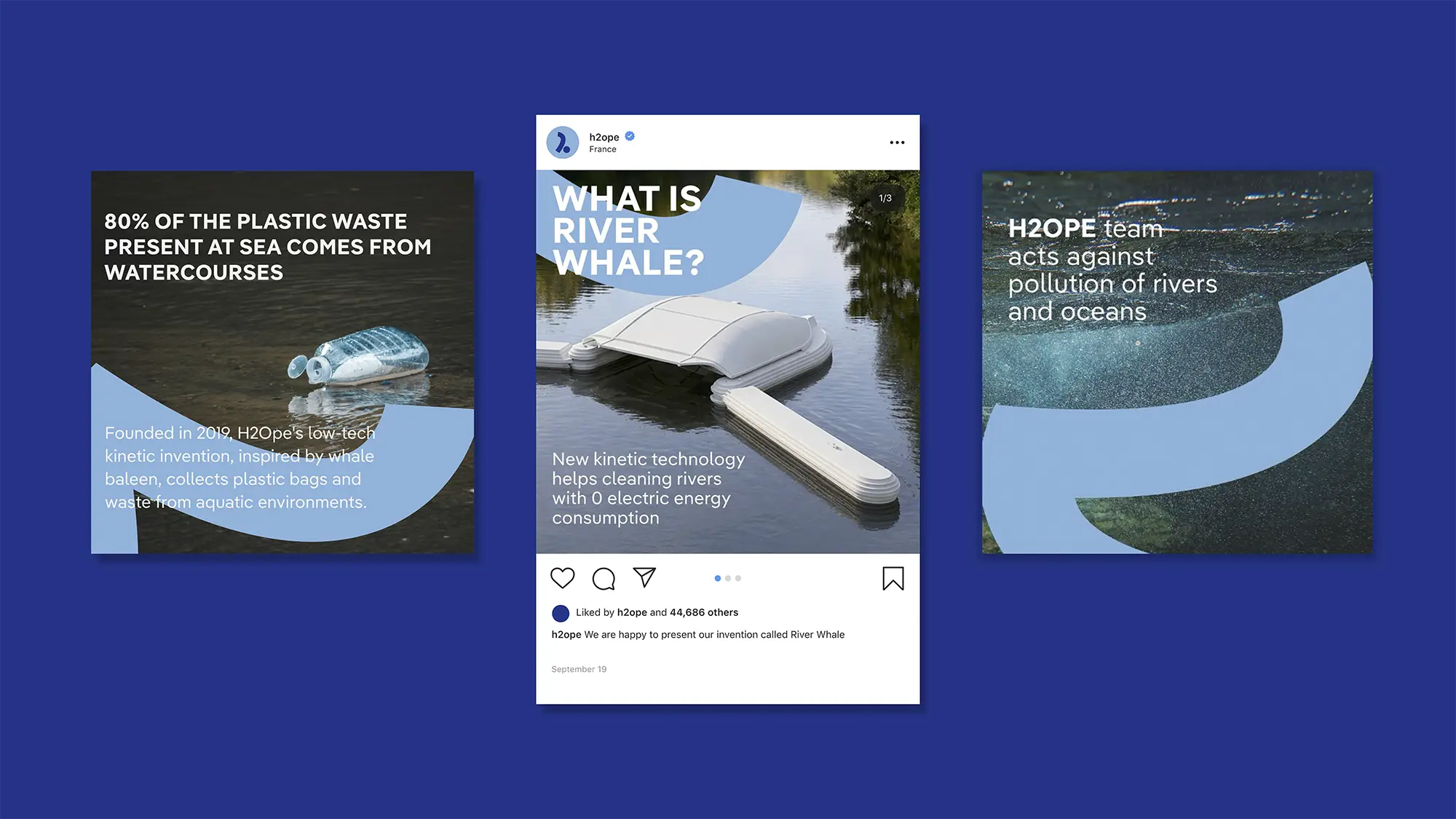
A systemic problem cannot run on a single stakeholder. The audience map was deliberately layered, and each layer is addressed in its own register. Public authorities and municipalities hold the rivers, the permits, and the budgets. They are addressed in the language of measurable impact, regulatory alignment, and long-term vision — backed by transparent data and a clear case for why river-level intervention is more cost-effective than downstream cleanup. Waste recycling companies are operational partners, not customers in the traditional sense. They turn the collected plastic into a material stream, so the conversation centres on process reliability, feedstock quality, and the consistency of supply — not on storytelling. Gen Z and Millennials are not the buyers; they are the amplifiers. The public pressure they generate is what gives municipalities a mandate to commission and investors confidence to fund. Instagram and TikTok aren't marketing for marketing's sake in this system — they are political weight, deliberately mobilised. Operators, regulators, public. None of these groups alone activates H2OPE. The communication system is built to run all three in parallel.
The System
The communication architecture sits on two intersecting frameworks: Double Diamond for analytical depth, AIDA for marketing function. One axis asks what we say; the other asks how we move people from awareness to action. Discover and Define clarified what H2OPE actually was: a SWOT and communication audit, founder interviews, competitor benchmarking, audience surveys, and a Business Model Canvas that mapped revenue streams beyond grants — service fees, recycled material sales, carbon credits, corporate partnerships. Develop and Deliver translated that into a working communication system: audience-specific messaging frameworks, a revamped visual identity, web and social mockups, a partnership pitch deck designed to close investor conversations, and a feedback loop to refine the system in use. Three deliverables now operate synchronously across the AIDA funnel. Brand identity generates Attention. Social content sustains Interest and grows Desire. The pitch deck closes Action. Each piece serves a stage; together they form a self-reinforcing loop the H2OPE team can run independently — the system was designed to keep working after the project ended, not to create dependence on the agency that built it.
—